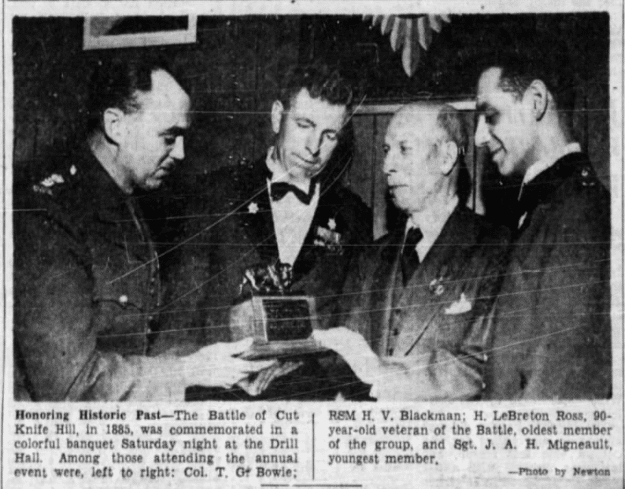
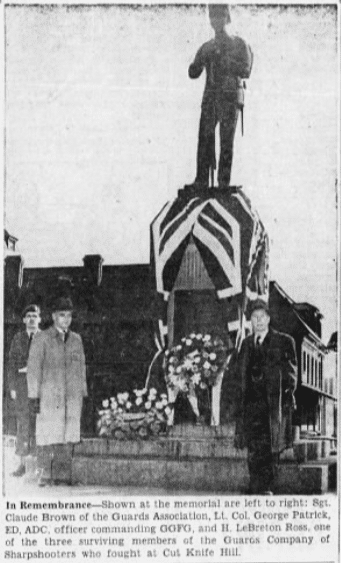
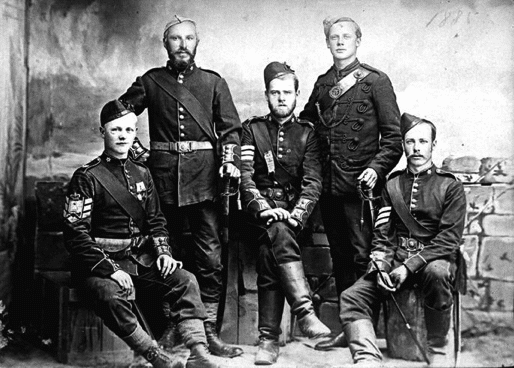
Henry LeBreton Ross was born in Québec City on 23 March 1863, moving with his family to Ottawa in 1866. Ross began his career with the federal government in 1880, working as a clerk with the Department of Railways and Canals. Around 1881, he also enlisted with the Governor General’s Foot Guards as a private. By the following summer, he had been promoted to the rank of corporal, and by 1885 reached the rank of sergeant.
When news of the Northwest Rebellion reached Ottawa, military authorities ordered the formation of a volunteer militia. Three officers and 48 men — including Ross — were raised from the Governor General’s Foot Guards and the 43rd Regiment. Ross took part in operations against Chief Big Bear in June 1885, which eventually led to the Chief’s surrender.
Soon after returning from the West in July 1885, Ross was promoted to Colour Sergeant — a position previously held by Charles Francis Winter.
On 7 July 1886, Ross applied for a Military Bounty Land Warrant for his service in Western Canada. Like many veterans of that campaign, however, Ross had little interest in farming and signed his scrip over to a relative.
The North West Canada Medal was issued to military personnel on 18 September 1885. Although the medal was issued without inscriptions of name and rank, many were later inscribed by their recipients. Ross had the edge of his medal engraved with his rank, name, and regiment.
On 27 July 1887, Ross married and would have two children. He left the Governor General’s Foot Guards in 1888, with the rank of 2nd Lieutenant.
Throughout his time with the Governor General’s Foot Guards, Ross continued working for the Department of Railways and Canals, retiring in 1933 after 53 years of service. On 21 March 1954, he died in Ottawa and is buried at Beechwood Cemetery.
Source – Unattributed write up in electronic museum display.